Open Source · Self-Hosted · Bring Your Own Model

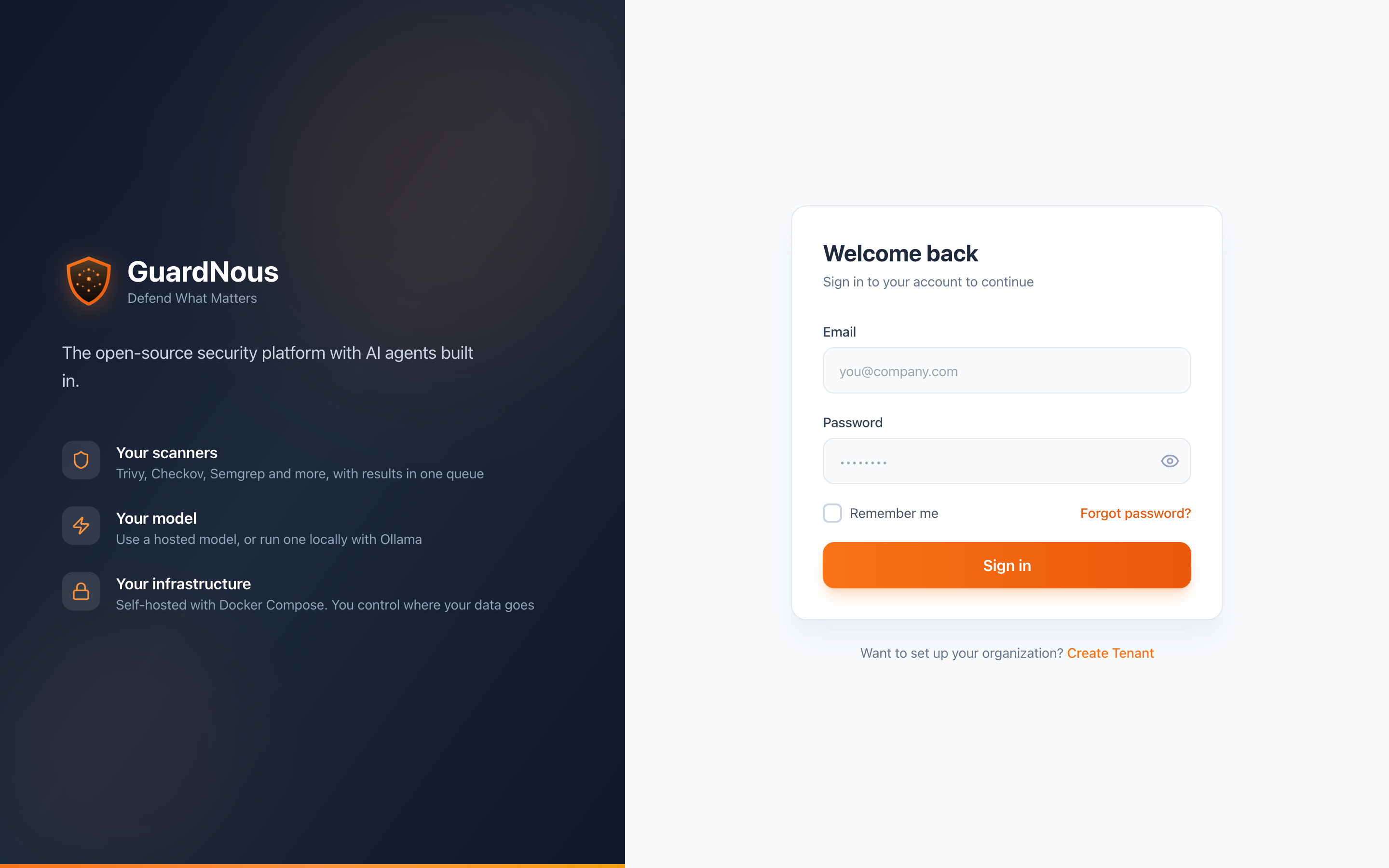
Your scanners.
Your model.
Your infrastructure.

Security AI agents you can audit. GuardNous is the open-source security platform with AI agents built in. It runs the scanners you already trust, checks your live cloud accounts without access keys, and lets agents fix what they find, with the model you choose, on your own infrastructure. Every agent action is recorded, and nothing changes until a person approves the exact change.

An open-source project by Harsh Khajgiwale

  • Runs on your serversYour code and cloud data stay with you
  • Your own AI modelA hosted provider, or a local one
  • Nothing changes unapprovedYou see the exact change first
  • Free and openApache 2.0, no licence key

See it in action

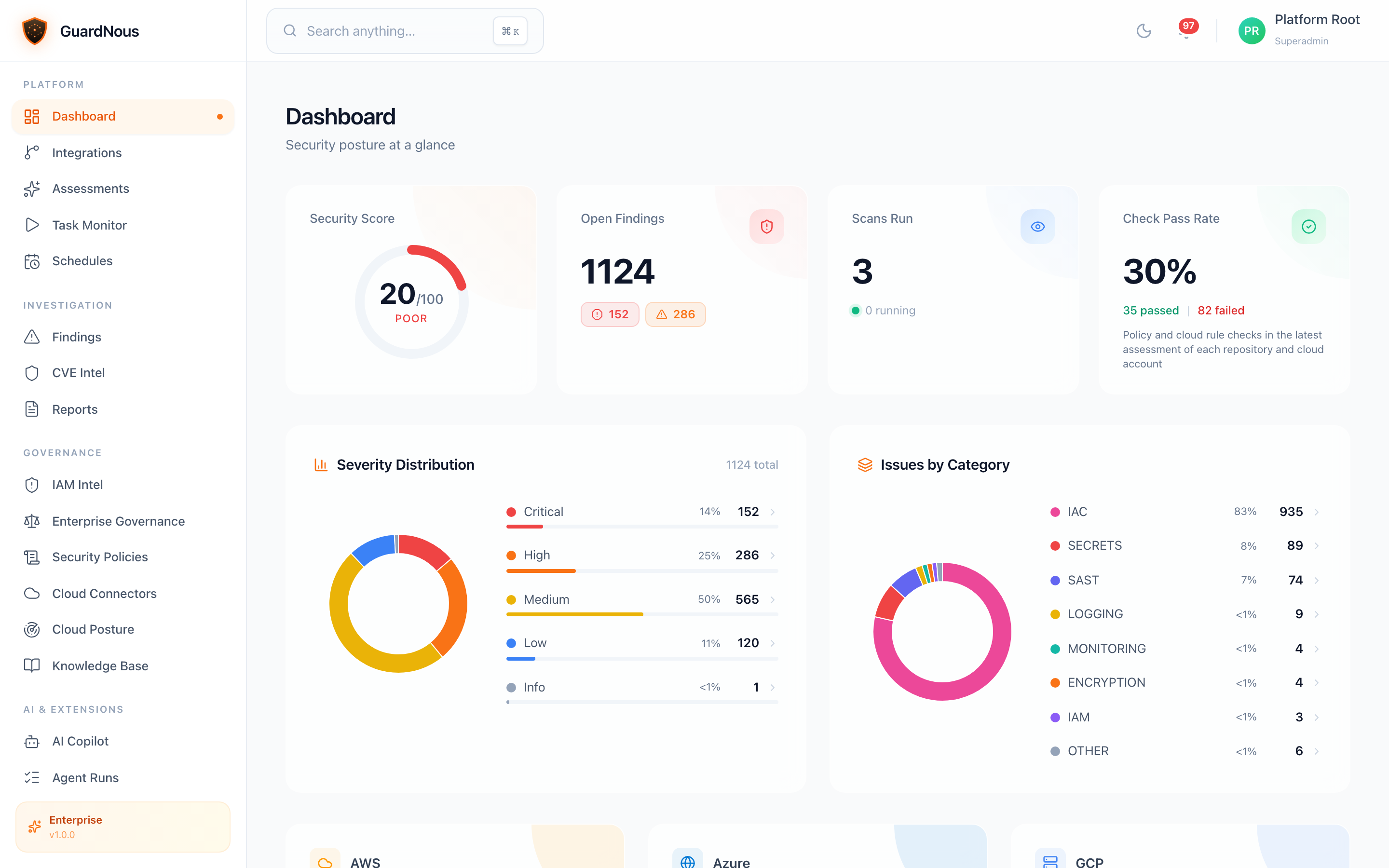
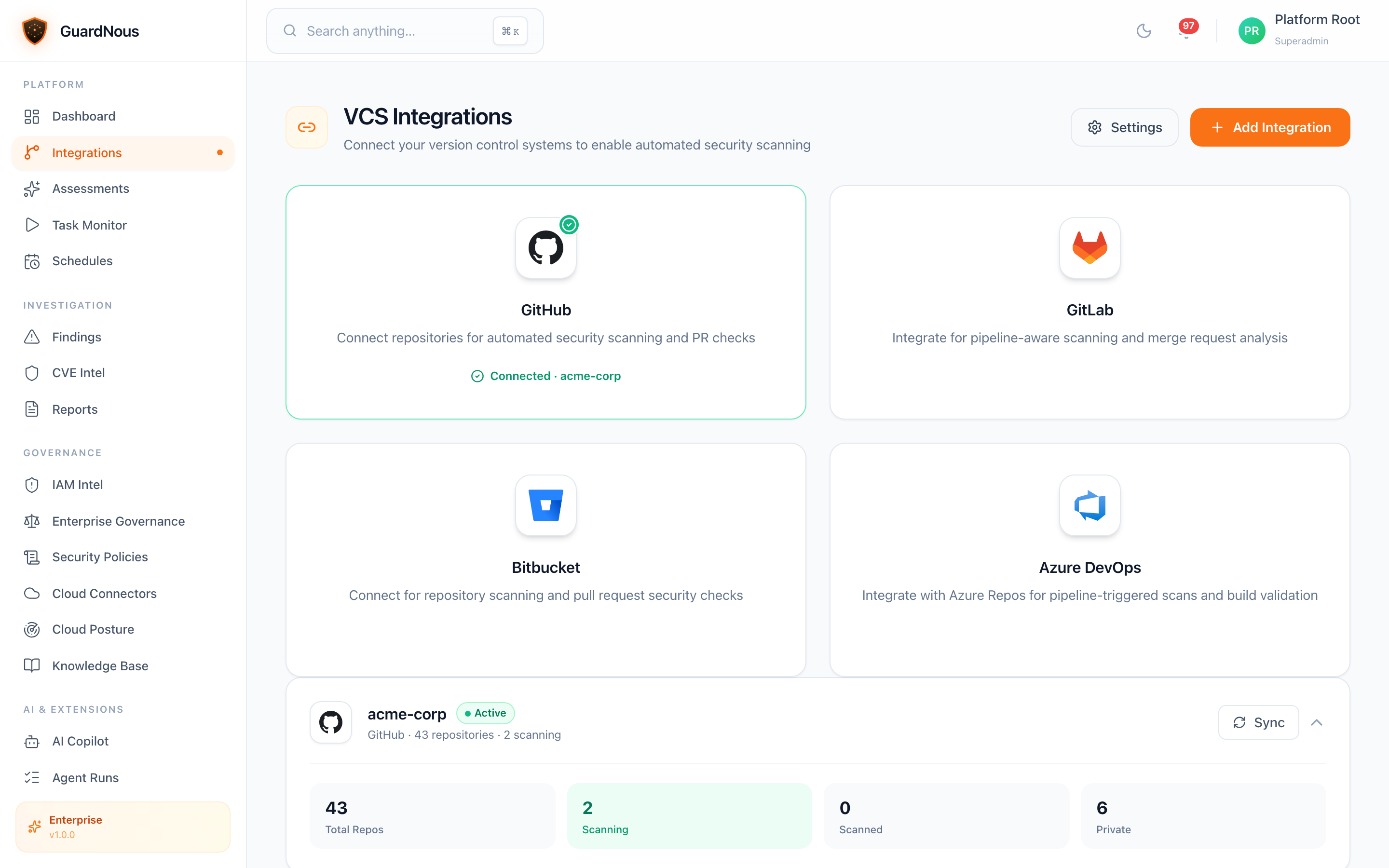
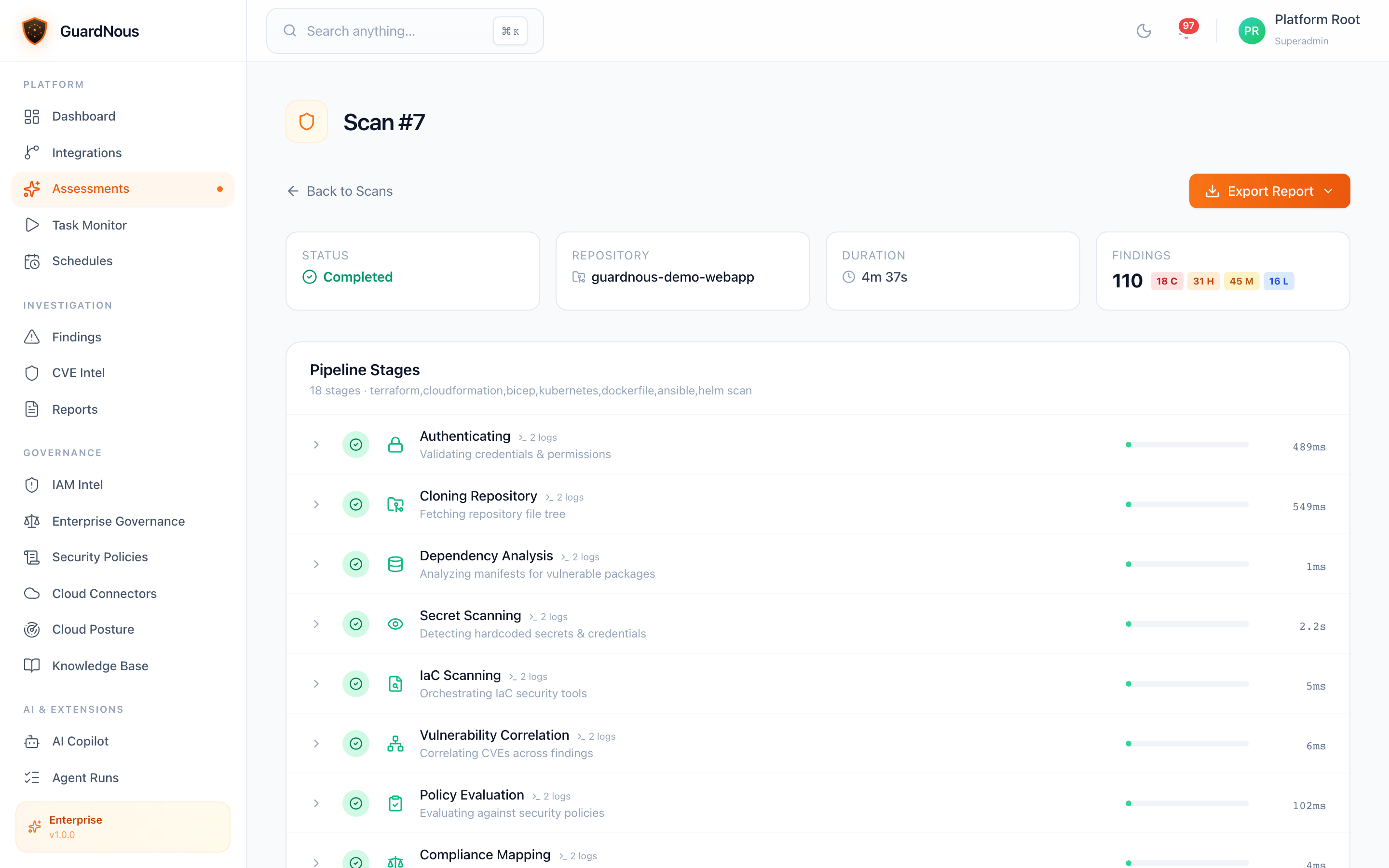
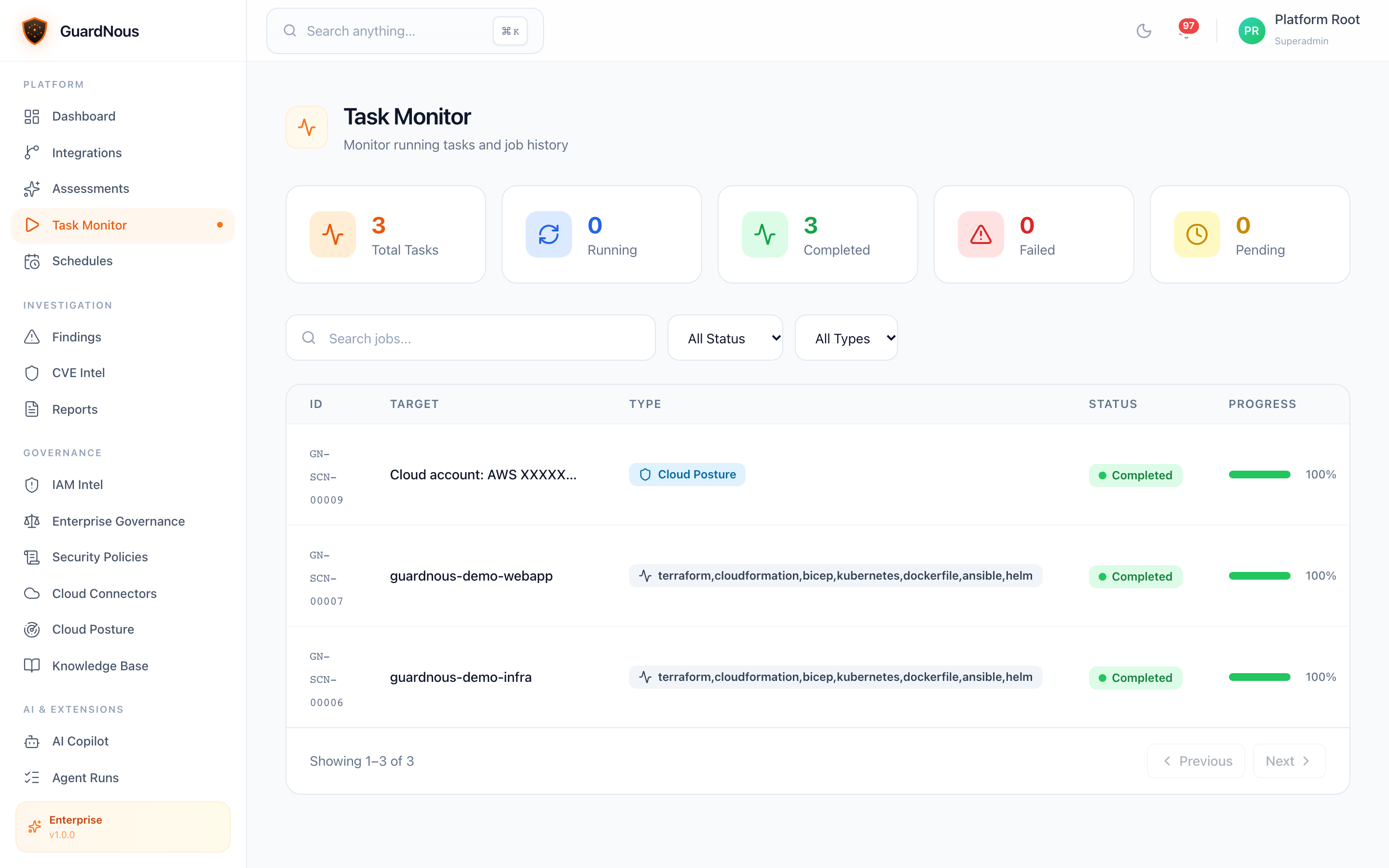
Real screens from a running installation, with a connected AWS account and two scanned repositories.
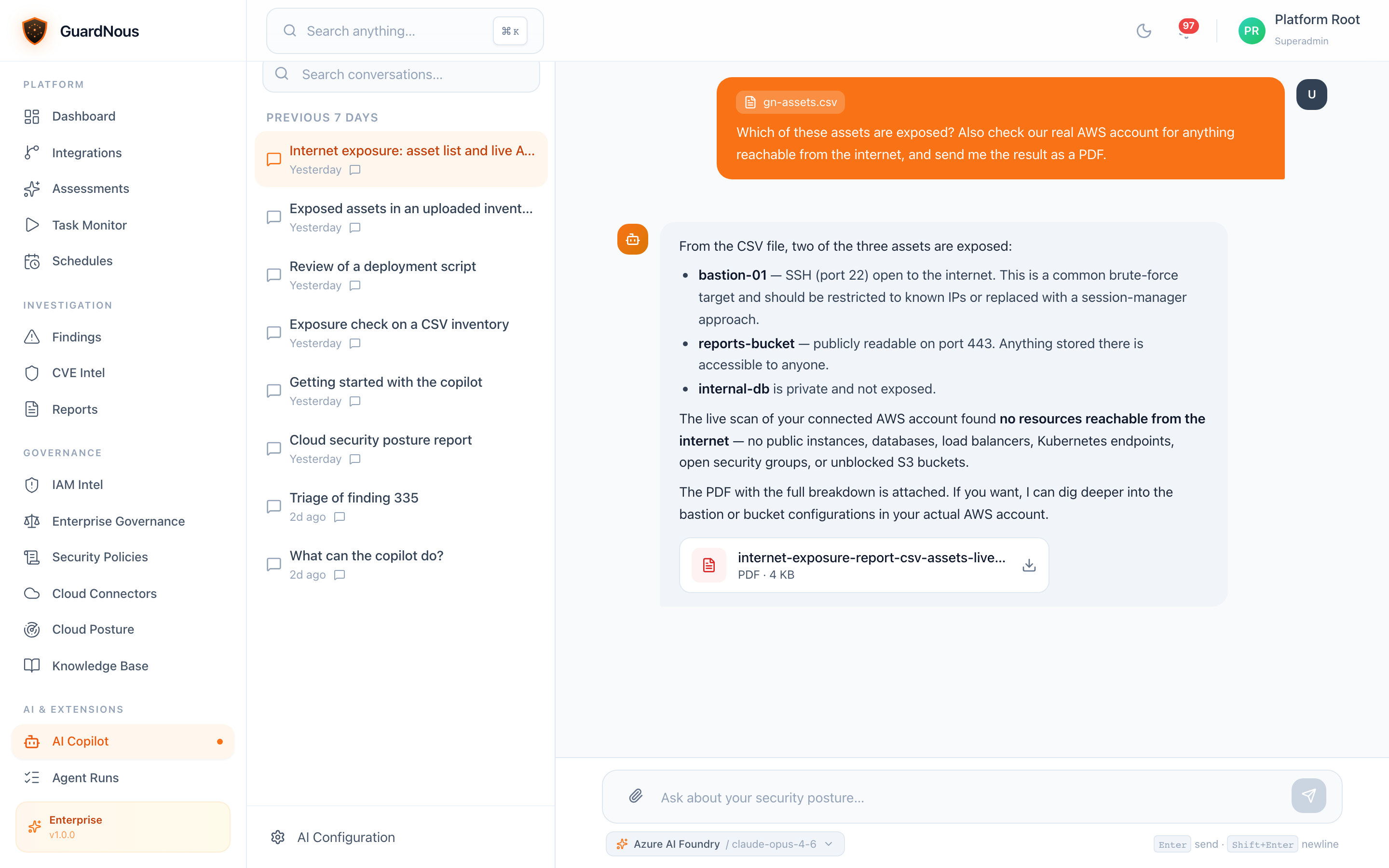
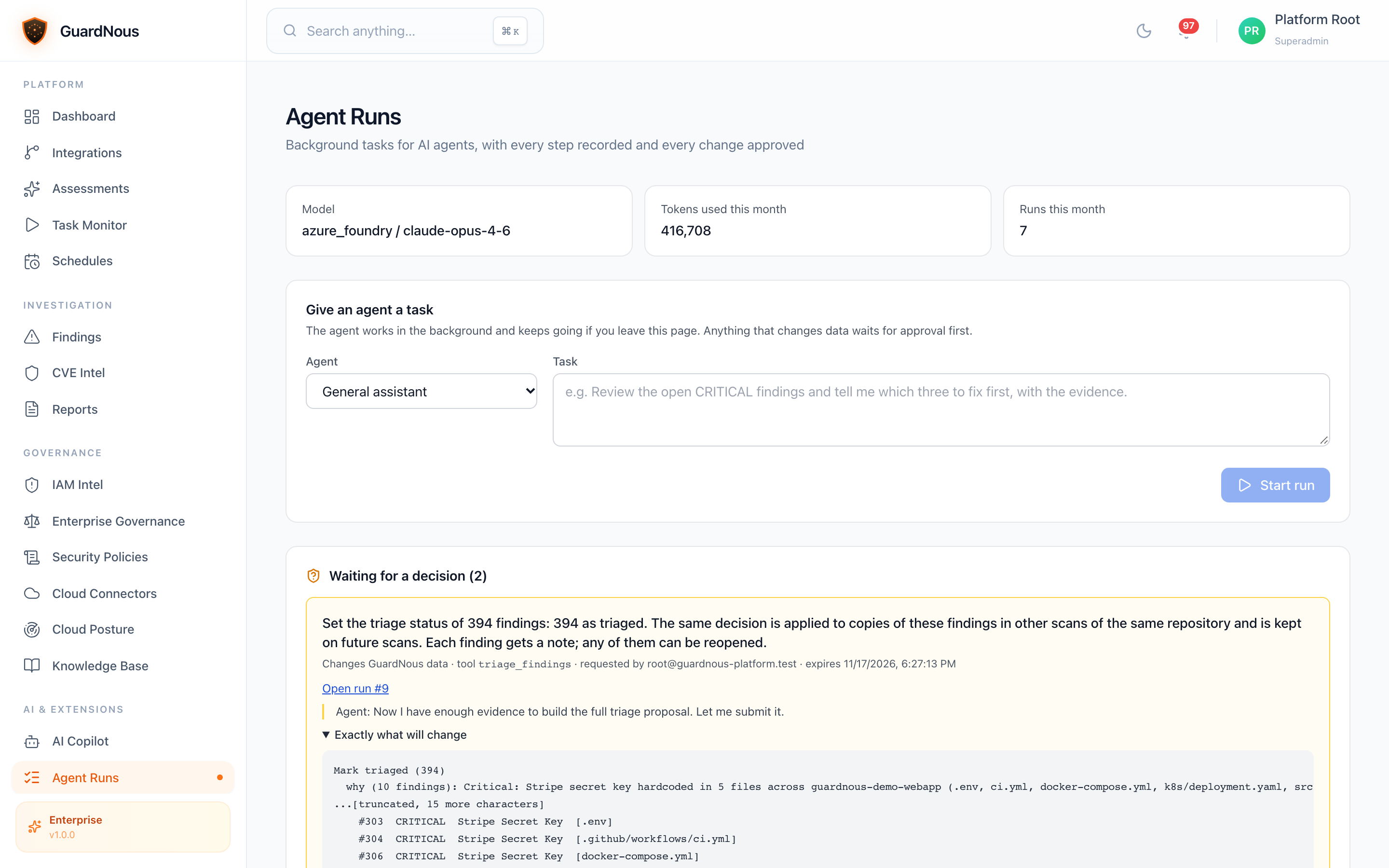
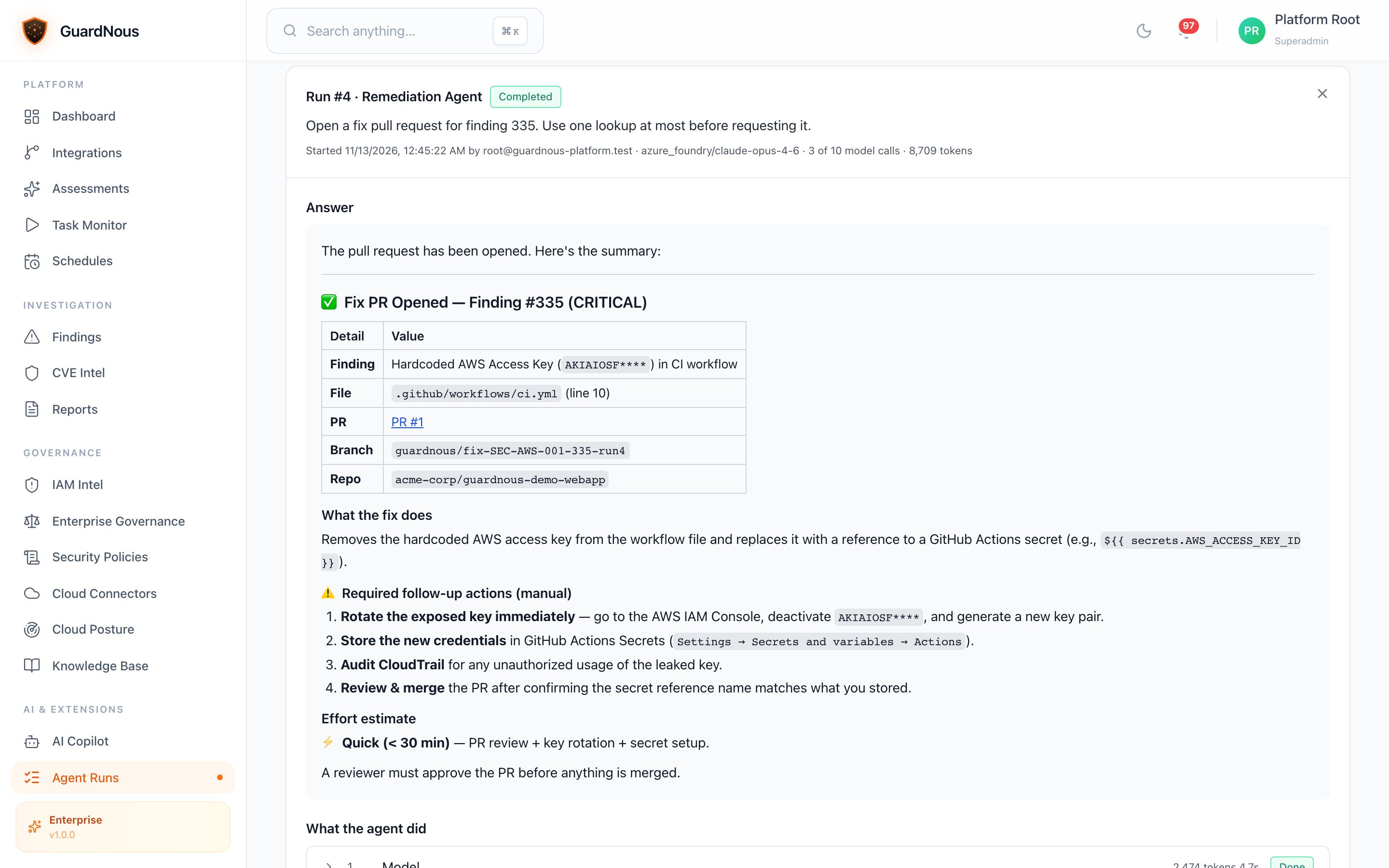
Use the arrows to move through the tour, and click a screen to enlarge it. Account numbers and user names in the screenshots are masked.
What you can do with it

Five jobs, each with the screen you would use for it.

01

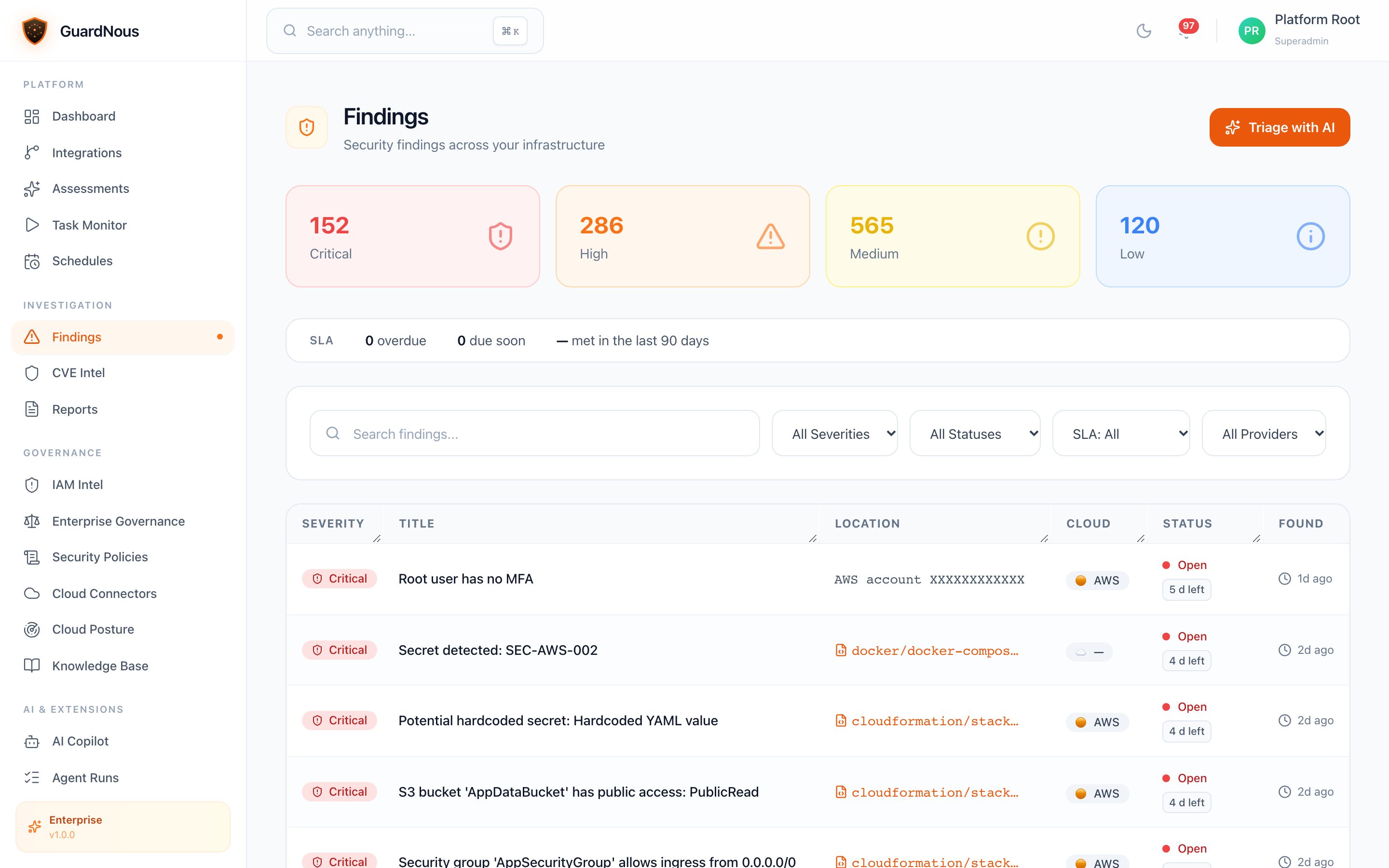
See every finding in one place

  • Runs Semgrep, Trivy, Checkov, tfsec and Gitleaks, plus built-in Terraform, CloudFormation, Bicep and secrets scanners, on your GitHub, GitLab, Bitbucket or Azure DevOps repositories.
  • One list from all of them, with a deadline to fix each finding based on its severity.
  • A decision such as "false positive" is kept when the repository is scanned again.
Findings list with severity counts and SLA deadlines
02

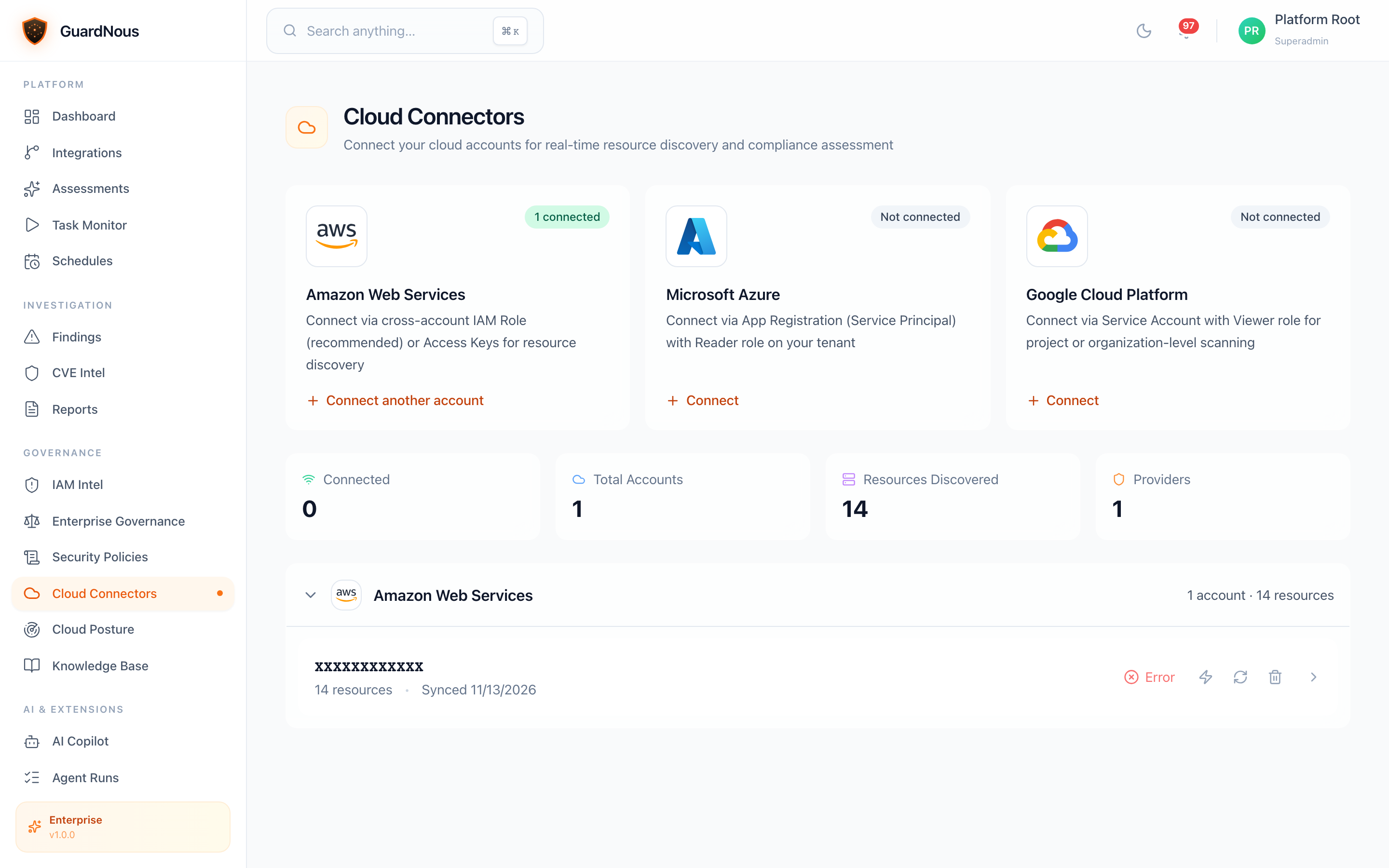
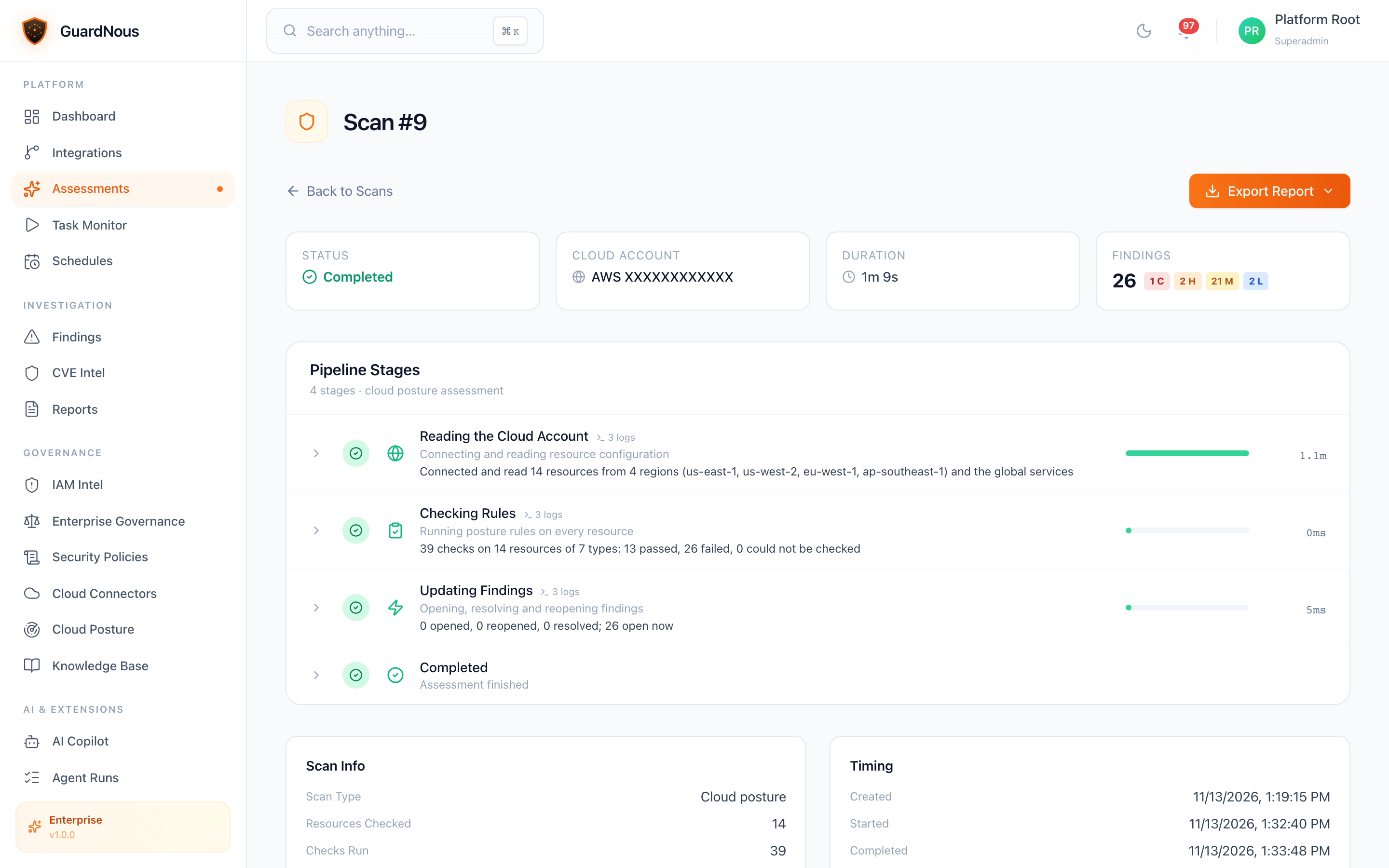
Check your AWS account, without storing keys

  • Connects through OIDC federation and one CloudFormation stack. No access key is created, copied or stored, and the role is read-only by default.
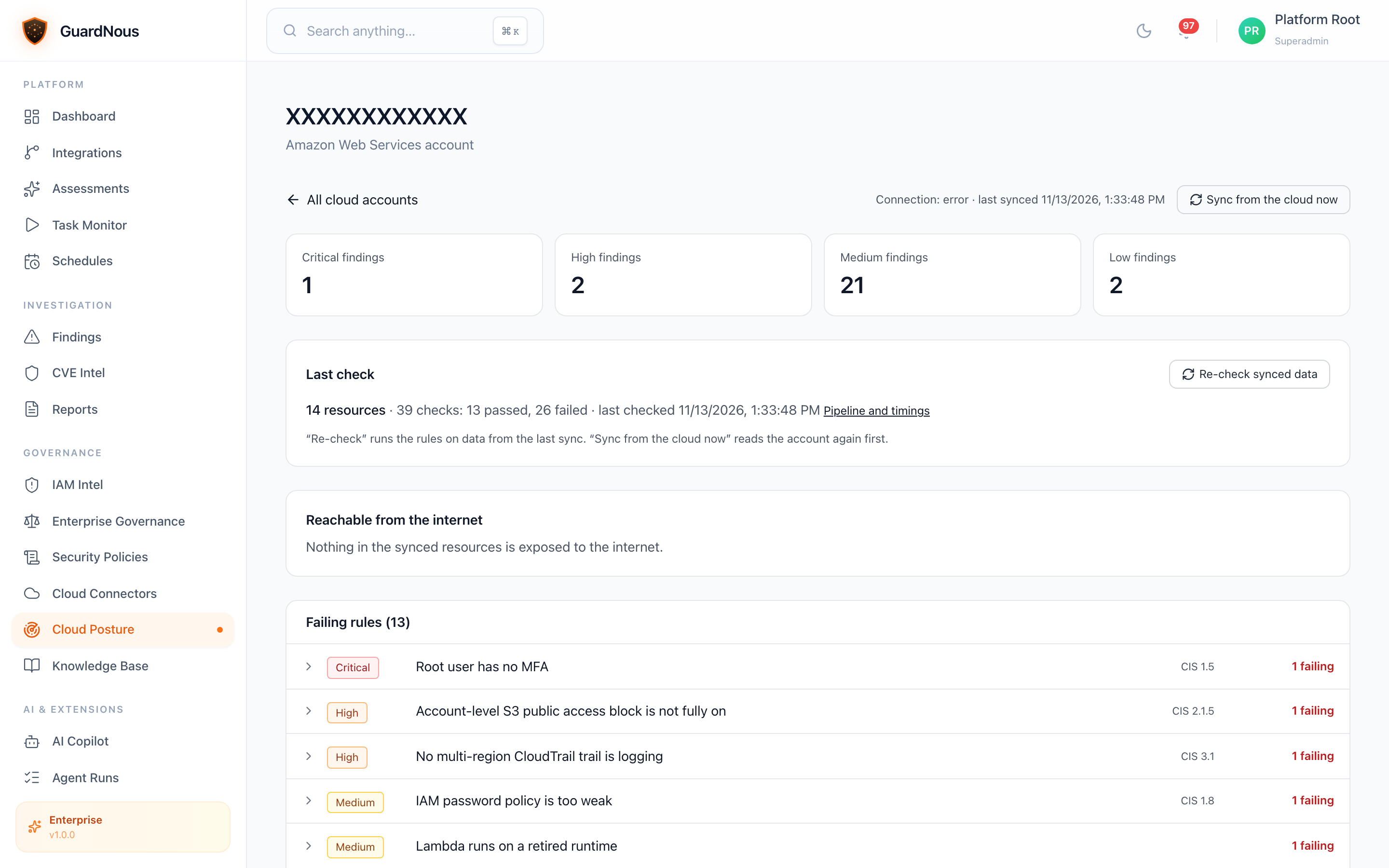
  • 44 rules on the live account, 19 of them mapped to CIS AWS Foundations v1.4.0, and a view of what is reachable from the internet.
  • Azure and Google Cloud accounts can be connected and inventoried. Posture rules exist for AWS only today.
Cloud posture page of one AWS account with failing rules
03

Let an agent fix it, with your approval

  • An agent can triage findings, open a fix pull request, or fix one of five AWS misconfigurations.
  • It stops first and shows the exact change: the real diff, or the real cloud change. What runs is what was approved.
  • A change outside GuardNous needs a second person. Every model call and tool call is recorded, and each run has a step and token budget.
Agent run waiting for approval, showing exactly what will change
04

Ask questions about your own data

  • A chat that answers from your findings, repositories and cloud inventory, not from general knowledge.
  • Attach a PDF, Word, Excel, CSV, JSON or text file, and download the answer as a PDF.
  • Uses the model you choose. Chats are private to the person who started them.
AI Copilot chat with an attached file and a PDF download
05

Show where you stand for an audit

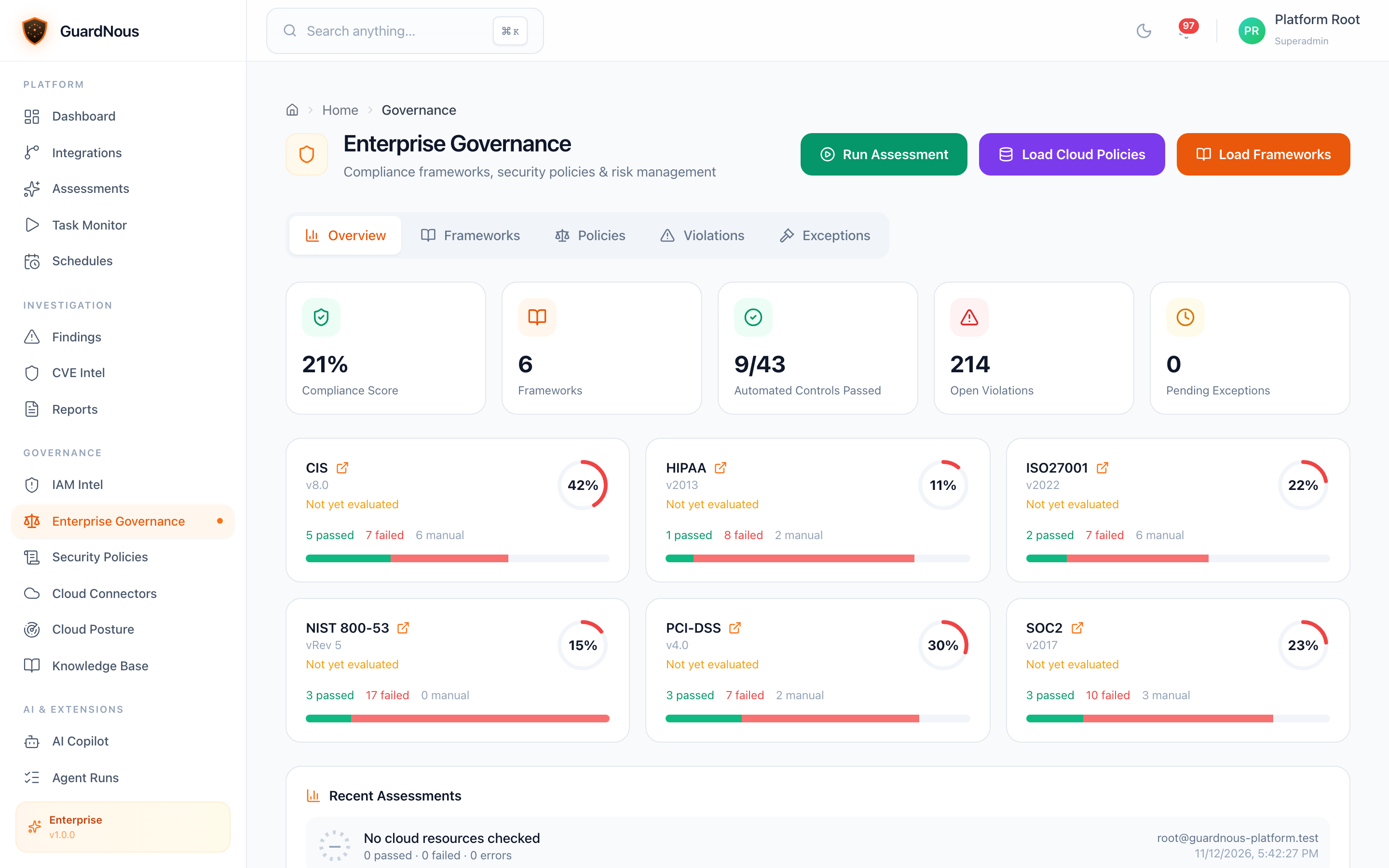
  • Findings are mapped to 6 compliance frameworks with 92 controls, including CIS, SOC 2, ISO 27001, PCI-DSS, HIPAA and NIST 800-53.
  • 21 built-in policies, and you can write your own.
  • PDF reports on demand or on a schedule, and an SBOM (CycloneDX 1.5) for each repository assessment.
Governance page with compliance frameworks and scores

Four things that are different

GuardNous does not try to out-scan anyone. It runs the scanners that already exist. The difference is who is in control.

It runs on your infrastructure

Six containers started by one command. Your code, findings and cloud inventory stay in your own database.

You choose the AI model

OpenAI, Azure OpenAI, Azure AI Foundry, Anthropic, or a local model through Ollama. The key is yours and is stored encrypted.

You can audit the agents

Every model call and tool call of a run is recorded. Anything that changes something waits for a person, who sees the exact change.

It is open source

Apache 2.0. You can read what an agent is allowed to do, what each rule checks, and change either.

What it is not

  • Not a new scanner. Detection comes from the scanners it runs.
  • Not multi-cloud posture yet. The 44 rules are for AWS.
  • Not a finished product. This is a first release by one developer.
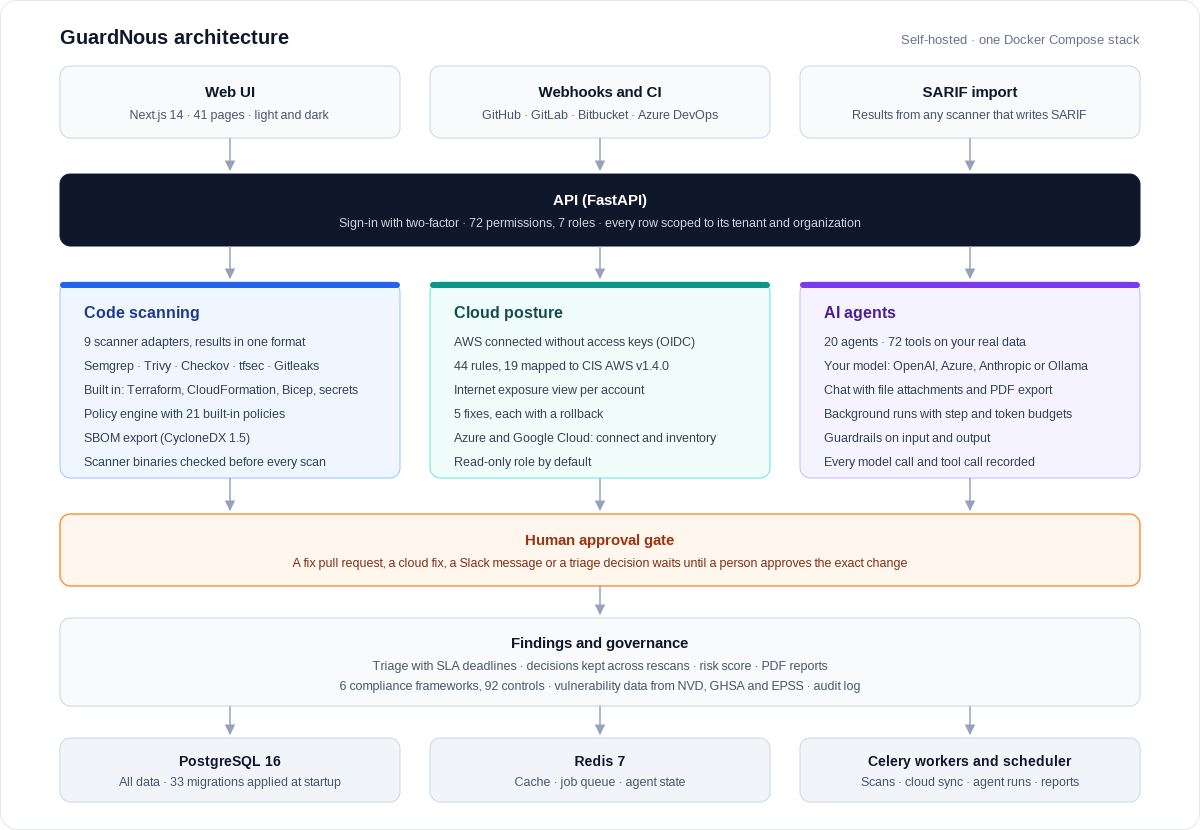
GuardNous architecture: web UI, webhooks and SARIF import enter through the API and reach three engines (code scanning, cloud posture, AI agents). Any change waits at a human approval gate. Findings and governance sit on PostgreSQL, Redis and Celery workers.
How the parts fit together. More detail in the architecture notes.

What has been run for real

Everything has automated tests. Not everything has been run against the real service yet. This is the honest list.

Verified against the real service

  • Install with Docker Compose, from a clean copy
  • The nine scanners, findings and triage
  • GitHub: connect, scan repositories, fix pull requests
  • AWS: keyless connection, reading an account, the 44 rules
  • AI chat and agent runs with approval, on Azure AI Foundry

Tested with simulated services only

  • GitLab, Bitbucket, Azure DevOps
  • Azure, Google Cloud: connect and inventory
  • AWS fixes and their rollback
  • Webhooks, Slack, scheduled e-mail reports
  • OpenAI, Azure OpenAI, Anthropic and Ollama as the model

Preview, not yet run

  • Kubernetes with the Helm chart
  • The end-to-end browser test suite

Have access to one of the untested services? Trying it and reporting what happened is the most useful contribution right now. See the full list and how to help.

One command to run it

You need Docker with Compose 2.24 or newer. Nothing to sign up for.

# Clone and run
$ git clone https://github.com/guardnous/guardnous.git
$ cd guardnous
$ ./scripts/setup.sh

# Then open the dashboard
$ open http://localhost:7003

What the script does

  1. Generates the secret keys and writes them to a local .env file.
  2. Builds the images and downloads the scanners. The first build takes several minutes.
  3. Creates the database and starts all six services.
  4. Prints the administrator's sign-in and a generated password, shown once. There is no default password.

Verified on macOS. The images build on Linux in CI, but nobody has run the full install on Linux or Windows (WSL) yet.

Questions people ask first

Does my code or cloud data leave my network?

GuardNous stores everything in your own database and sends nothing to its authors. The one exception is the AI model: when an agent works, the findings and file excerpts it needs are sent to the model provider you configured. Use a local model through Ollama to keep that inside your network too. Vulnerability data is downloaded from public sources (NVD and GitHub advisories); nothing of yours is uploaded for it.

Is it ready for production?

Not yet, and it would be wrong to say otherwise. It is a first release (0.1), built by one developer. GitHub and AWS have been run for real; several other integrations have only been run against simulated services. Try it on a test repository and a test cloud account first, and read the list of what has been verified.

Which AI models work?

OpenAI, Azure OpenAI, Azure AI Foundry, Anthropic, and local models through Ollama. So far only Azure AI Foundry has been used for real; the others are implemented and tested with simulated responses. Without a model, scanning, findings, cloud posture and reports all still work; only the chat and the agents need one.

What does it cost to run?

The software is free. You pay for the machine it runs on and for your own model usage. As a reference point, one Triage Agent run that proposed decisions for 394 findings used about 220,000 tokens.

Can an agent change something without me?

No. Reading is automatic; changing is not. A triage decision, a fix pull request, a cloud fix or a Slack message stops and waits for a person, who sees the exact change. Anything that changes a system outside GuardNous needs a second person, not the one who asked.

How is this different from running the scanners myself?

The scanners find problems; they do not give you one list across tools, deadlines, triage that survives the next scan, roles and permissions, reports, or a check of your live cloud account. GuardNous adds those around the scanners you already use.

Does it run on Kubernetes?

A Helm chart is included as a preview. It has not been run on a cluster yet, so Docker Compose is the supported way to run GuardNous today.

How can I help?

Try an integration you have access to and report what happened, whether it worked or not. The status page lists what needs a tester, and the contributing guide covers code changes.